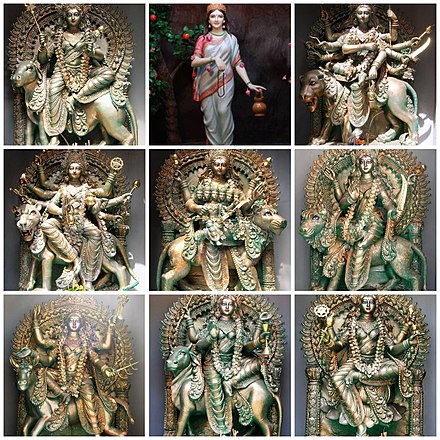
Navadurga is a term used in Hindu mythology to refer to the nine manifestations of the goddess Durga. The word “nava” means nine, and “durga” is a Sanskrit word that means “invincible.” The Navadurga are worshipped during the festival of Navratri, which is celebrated for nine days in honor of the goddess Durga.The festival of Navratri is one of the most important festivals in the Hindu calendar, and it is celebrated with great fervor and enthusiasm across India. During the festival, devotees worship different forms of the goddess Durga, who is considered to be the embodiment of feminine power and energy.Each of the nine manifestations of Durga is associated with a particular day of the festival, and is worshipped with specific rituals and offerings. Let’s take a closer look at each of the nine forms of Durga that make up the Navadurga.
1. ShailaPutri;
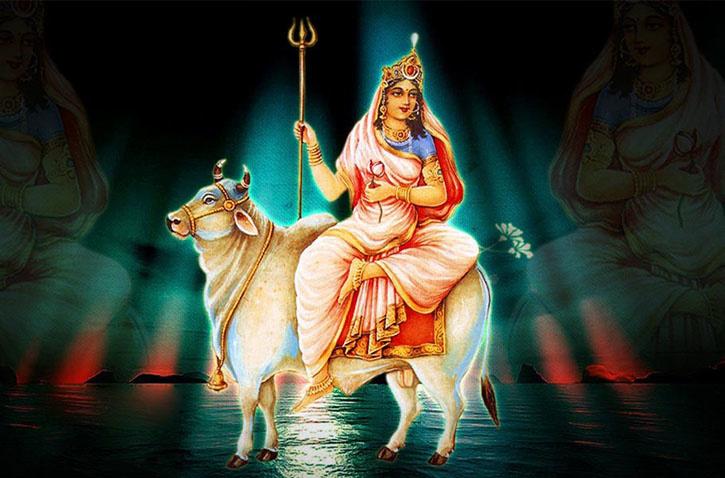
Shailaputri is the first manifestation of the goddess Durga, and is worshipped on the first day of Navratri. She is also known as “Parvati”, and is believed to represent the power of creation and purity.
The name “Shailaputri” means “daughter of the mountains”, and she is often depicted with a serene and peaceful demeanor, riding a bull and holding a trident and a lotus flower in her two hands. She is also shown wearing a white saree and adorned with jewels and flowers.According to Puranas, Shailaputri is the daughter of the Himalayas and the first wife of Lord Shiva.
She is believed to have taken birth in the house of King Daksha in her past life, and later married Lord Shiva. However, when Daksha insulted Lord Shiva in a grand sacrifice, Sati could not bear the humiliation and immolated herself in the fire. She was later reborn as Parvati and reunited with Lord Shiva.Shailaputri is worshipped to seek blessings for a happy and prosperous life, and is believed to bless her devotees with purity, strength, and devotion.
She is also associated with the energy of the Muladhara chakra, which is the root chakra located at the base of the spine. This chakra represents the foundation of life, and is associated with stability, grounding, and the material world.During the festival of Navratri, devotees offer prayers, perform rituals, and observe fasts to honor and seek the blessings of Shailaputri and the other forms of the goddess Durga.
2. BrahmaCharini;
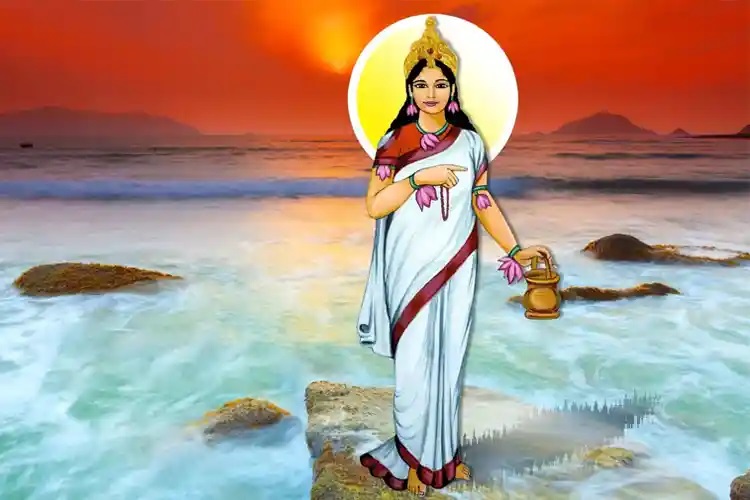
BrahmachariniBrahmacharini is the second manifestation of the goddess Durga, and is worshipped on the second day of Navratri.
She is also known as Tapasyacharini or Aparna, and is believed to represent the power of penance and spiritual austerity.The name “Brahmacharini” means “one who practices penance”, and she is often depicted as a goddess with two hands, holding a rosary or a water pot in one hand, and a rudraksha mala in the other hand.
She is also shown wearing white clothes and holding a kamandalu or a water pot, which symbolizes the purity and simplicity of her lifestyle.According to Puranas, Brahmacharini is the first wife of Lord Maheshwara. She is believed to have performed severe penance and austerity in order to win Lord Shiva’s hand in marriage.
She is also associated with the energy of the Swadhisthana chakra, which is the second chakra located in the lower abdomen, and is associated with creativity, emotions, and sexuality.
Brahmacharini is worshipped to seek blessings for spiritual growth, purity, and devotion. She is believed to help her devotees overcome negative traits such as greed, anger, and ego, and to guide them towards a life of simplicity, discipline, and self-control. By worshipping Brahmacharini, one can also gain strength, courage, and determination to achieve their goals and overcome obstacles in life.
During the festival of Navratri, devotees offer prayers, perform rituals, and observe fasts to honor and seek the blessings of Brahmacharini and the other forms of the goddess Durga.
3. ChandraGhanta;
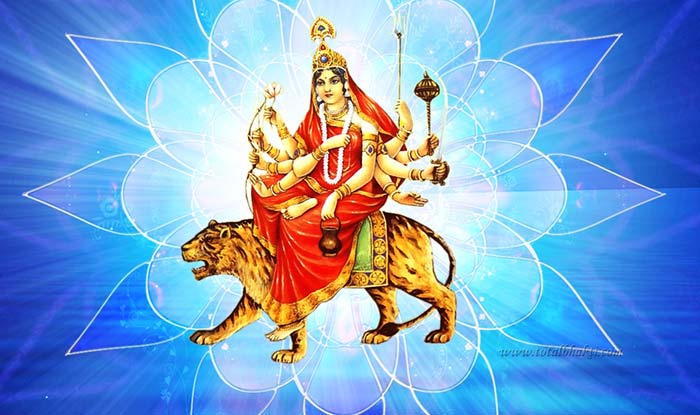
Chandraghanta is the third manifestation of the goddess Durga, and is worshipped on the third day of Navratri. She is also known as Chandika, Rannchandi, and Durga, and is believed to represent the power of bravery, beauty, and grace.
The name “Chandraghanta” means “one who has a half-moon shaped bell”, and she is often depicted with a fierce expression, riding a lion or a tiger, and holding weapons such as a trident, sword, and bow and arrow. She is also shown wearing a crescent moon-shaped bell or ghanta on her forehead, which symbolizes her fearlessness and bravery.She is believed to have a third eye on her forehead, which opens when she is angry, and she is said to have fought many battles against evil demons to protect the universe.
Chandraghanta is worshipped to seek blessings for protection, courage, and victory over enemies. She is also believed to bless her devotees with spiritual growth and wisdom. By worshipping Chandraghanta, one can overcome fear, anger, and negativity, and cultivate a sense of inner peace and harmony.
During the festival of Navratri, devotees offer prayers, perform rituals, and observe fasts to honor and seek the blessings of Chandraghanta and the other forms of the goddess Durga.Watch the full detailed video on these three forms of Goddess Durga….
4. Kushmanda;
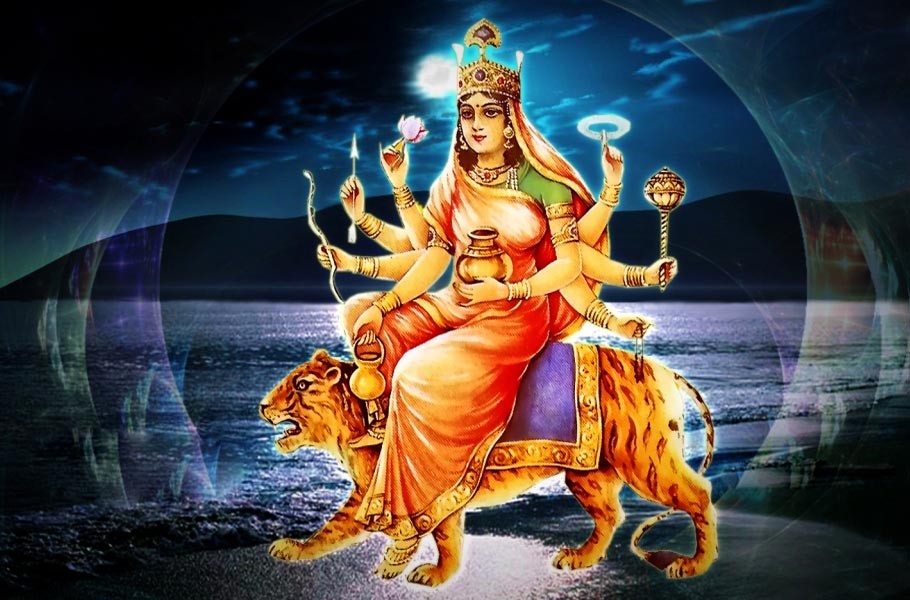
Kushmanda is the fourth manifestation of the goddess Durga, and is worshipped on the fourth day of Navratri. She is also known as Adi Shakti, and is believed to represent the power of creation and cosmic energy.
The name “Kushmanda” means “the one who created the universe with a smile”, and she is often depicted with eight or ten arms, holding weapons such as a bow and arrow, sword, trident, and lotus, as well as a pot of divine nectar or amrit.
She is also shown riding on a lion or tiger, and her complexion is believed to be golden or radiant like the sun.According to Puranas, Kushmanda is said to have created the universe with her divine smile, and is believed to have the power to eliminate all darkness and negativity from the world.
She is also associated with the energy of the Manipura chakra, which is the third chakra located in the solar plexus, and is associated with personal power, will, and transformation.Kushmanda is worshipped to seek blessings for creativity, prosperity, and success. She is believed to bless her devotees with good health, wealth, and happiness, and to help them overcome obstacles and achieve their goals in life.
By worshipping Kushmanda, one can also gain inner strength and courage to face challenges and take bold steps towards their dreams and aspirations.During the festival of Navratri, devotees offer prayers, perform rituals, and observe fasts to honor and seek the blessings of Kushmanda and the other forms of the goddess Durga.
5. SkandMata;
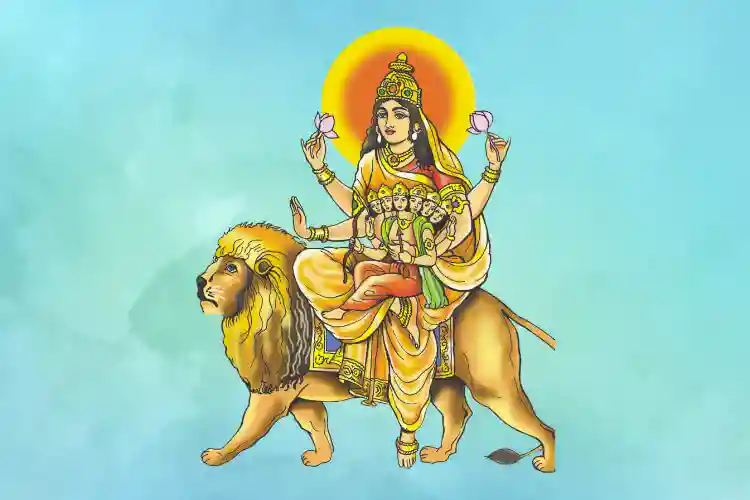
Skandamata is the fifth manifestation of the goddess Durga, and is worshipped on the fifth day of Navratri.
She is also known as Padmasana, and is believed to represent the power of motherly love and nurturing.The name “Skandamata” means “the mother of Skanda”, who is another name for Lord Kartikeya, the son of Lord Maheshwara and Sati.
Skandamata is often depicted with four arms, holding her son Skanda in her lap, as well as a lotus flower and a bell. She is also shown riding on a lion or tiger, and her complexion is believed to be radiant like gold.According to Puranas, Skandamata is said to be the form of a Goddess Sati, and is believed to be the embodiment of selfless love and devotion.
She is also associated with the energy of the Vishuddha chakra, which is the fifth chakra located in the throat, and is associated with communication, self-expression, and spiritual truth.Skandamata is worshipped to seek blessings for motherly love, nurturing, and protection. She is believed to bless her devotees with the ability to love unconditionally, and to protect them from harm and danger.
By worshipping Skandamata, one can also develop a deeper sense of compassion and empathy towards others, and cultivate a sense of inner peace and harmony.During the festival of Navratri, devotees offer prayers, perform rituals, and observe fasts to honor and seek the blessings of Skandamata and the other forms of the goddess Durga.
6. KatyaYani;
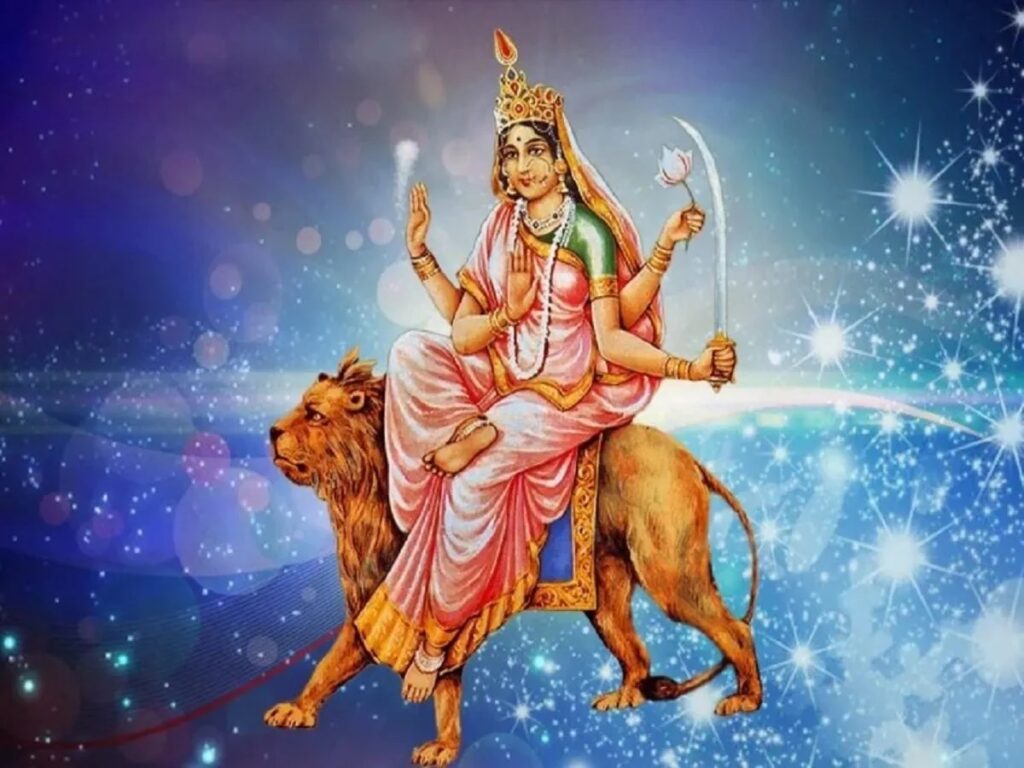
KatyayaniKatyayani is the sixth manifestation of the goddess Durga, and is worshipped on the sixth day of Navratri.
She is also known as Mahalakshmi, and is believed to represent the power of fierce determination and courage.The name “Katyayani” is derived from the name of the sage Katyayan, who is said to have performed a rigorous penance to seek the blessings of the goddess.
Katyayani is often depicted with four arms, holding a sword, lotus flower, and a shield, while the fourth arm is in a gesture of blessing. She is also shown riding on a lion or tiger, and her complexion is believed to be radiant like gold.According to Puranas, Katyayani is said to have taken the form of a warrior goddess, and is believed to have defeated the demon Mahishasura, who was causing chaos and destruction in the world.
She is also associated with the energy of the Anahata chakra, which is the fourth chakra located in the heart, and is associated with love, compassion, and inner peace.Katyayani is worshipped to seek blessings for strength, courage, and victory over obstacles. She is believed to bless her devotees with the ability to overcome challenges and achieve success in their endeavors. By worshipping Katyayani, one can also develop a sense of inner strength and resilience, and cultivate a spirit of fearlessness and determination.
During the festival of Navratri, devotees offer prayers, perform rituals, and observe fasts to honor and seek the blessings of Katyayani and the other forms of the goddess Durga.
7. KalaRatri
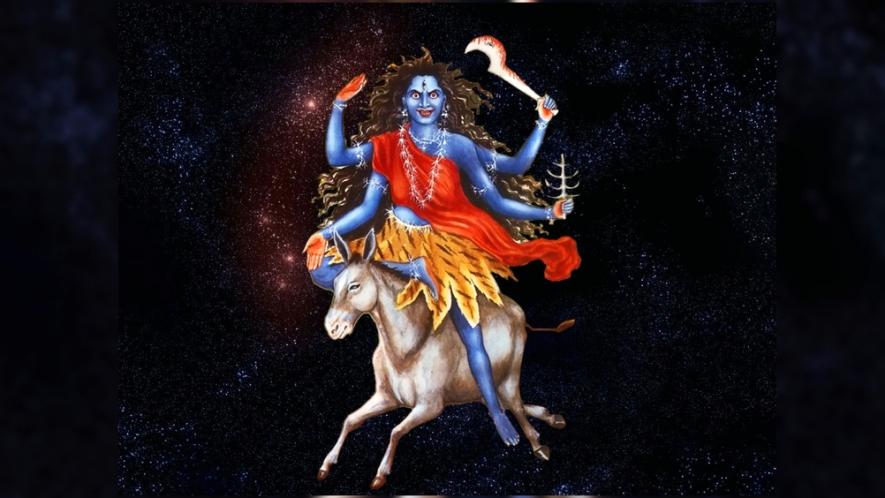
Kalaratri is the seventh manifestation of the goddess Durga, and is one of the most fierce and terrifying forms.
She is worshipped on the seventh day of Navratri, and is believed to have the power to destroy all the demons and evil forces in the universe.The name “Kalaratri” means “the dark night”, and she is often depicted with a dark complexion, long hair, and four arms. In her two left hands, she holds a sword and a noose, while her two right hands show blessings and protection.
She is often shown riding a donkey or a mule.Kalaratri is believed to have a fierce and destructive nature, and is often associated with the night, darkness, and death. However, she is also considered to be a protector of her devotees, and is worshipped to seek protection from evil forces and negative energies.
It is said that by worshipping Kalaratri, one can overcome fear, negativity, and obstacles in their lives. She is believed to grant her devotees strength, courage, and protection, and is also associated with the power of transformation and regeneration.In some versions, Kalaratri is said to have emerged from the third eye of the goddess Parvati, when she became extremely angry and wanted to destroy the demons who were causing chaos and destruction in the world. She is also believed to have defeated many powerful demons, including Raktabija, who had the power to multiply himself from each drop of his blood that fell to the ground.
Overall, Kalaratri is a powerful and fearsome manifestation of the goddess Durga, who represents the power of destruction, transformation, and protection. She is worshipped with great devotion and reverence during the festival of Navratri, and is believed to bless her devotees with strength, courage, and protection from evil forces.
8. MahaGauri;
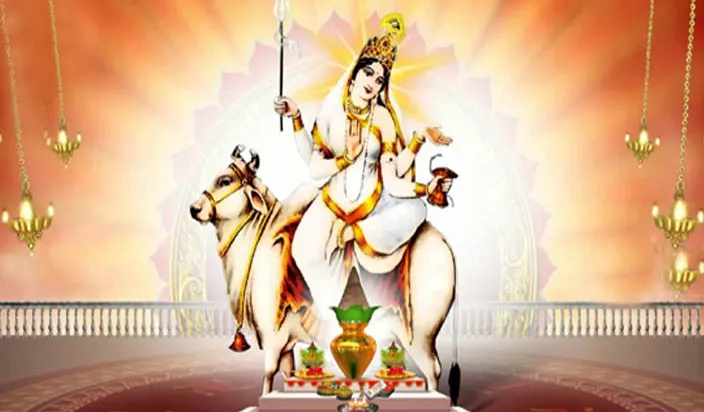
MahagauriMahagauri is the eighth manifestation of the goddess Durga, and is worshipped on the eighth day of Navratri.
She is also known as Shwetambardhara, and is believed to represent purity, peace, and compassion.The name “Mahagauri” means “extremely white”, and refers to the goddess’s radiant and pure white complexion.
Mahagauri is often depicted with four arms, holding a trident, lotus flower, and a drum, while the fourth arm is in a gesture of blessing. She is also shown riding on a bull or a white elephant, and is usually depicted wearing a white sari.
According to Puranas, Mahagauri is said to have taken the form of a young girl, and is believed to have performed severe penance to seek the blessings of Lord Shiva, her consort. Her penance was so rigorous that her complexion became dark, and it was only after Lord Shiva bathed her with the holy waters of the Ganges that her complexion became pure and white once again.Mahagauri is worshipped to seek blessings for purity, peace, and compassion.
She is believed to bless her devotees with a sense of inner purity and tranquility, and to help them overcome negative emotions and thoughts. By worshipping Mahagauri, one can also cultivate a spirit of kindness and empathy towards others, and develop a deeper sense of spiritual awareness and awakening.
During the festival of Navratri, devotees offer prayers, perform rituals, and observe fasts to honor and seek the blessings of Mahagauri and the other forms of the goddess Durga.
9. SidhiDhatri;
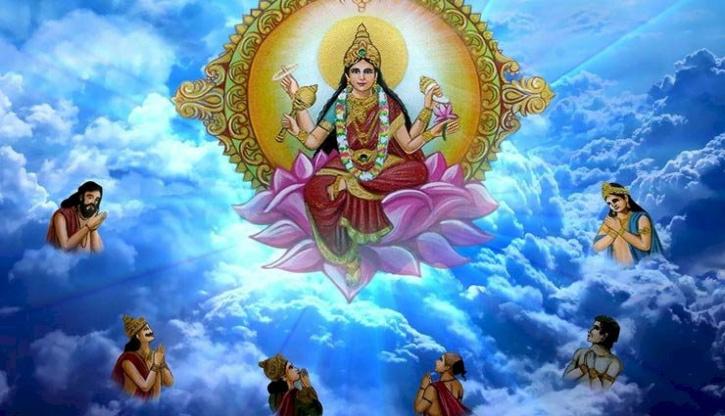
Siddhidhatri is the ninth and final manifestation of the goddess Durga, and is worshipped on the ninth and last day of Navratri.
She is also known as Saraswati, and is believed to represent the power of knowledge, wisdom, and spiritual enlightenment.The name “Siddhidhatri” means “bestower of all Siddhis”, which are supernatural powers or abilities that one can acquire through deep spiritual practice and devotion.
Siddhidhatri is often depicted with four arms, holding a lotus flower, a mace, a conch shell, and a discus. She is usually shown sitting on a lotus flower, and is depicted as radiant and luminous.According to Hindu mythology, Siddhidhatri is believed to have the power to grant Siddhis to her devotees, and is considered to be the ultimate manifestation of the goddess Durga.
She is also associated with the energy of the Sahasrara chakra, which is the seventh and highest chakra located at the crown of the head, and is associated with spiritual awakening and enlightenment.Siddhidhatri is worshipped to seek blessings for spiritual enlightenment, knowledge, and wisdom.
She is believed to bless her devotees with the ability to acquire Siddhis, and to help them overcome ignorance and attain a deeper understanding of the true nature of reality. By worshipping Siddhidhatri, one can also develop a sense of spiritual clarity and insight, and cultivate a deep connection with the divine.
During the festival of Navratri, devotees offer prayers, perform rituals, and observe fasts to honor and seek the blessings of Siddhidhatri and the other forms of the goddess Durga.
Beej Mantra
Beej mantras are sacred sounds that are believed to carry spiritual energy and power. Each form of Navadurga has its own beeja mantra, which is chanted during the worship of the goddess. Here are the beeja mantras for each form of Navadurga:
Shailaputri – “Om Hreem Vrishabhavahanaaya Namah”

Brahmacharini – “Om Hreem Brahmacharinyai Namah”

Chandraghanta – “Om Hreem Chandraghantaaya Namah”

Kushmanda – “Om Hreem Kushmandaayai Namah”

Skandamata – “Om Hreem Skandamaatreyai Namah”

Katyayani – “Om Hreem Katyayanyai Namah”

Kaalratri – “Om Hreem Kaalratriyai Namah”

Mahagauri – “Om Hreem Mahagauriyai Namah”

Siddhidhatri – “Om Hreem Siddhidhatriyai Namah”
Chanting these beeja mantras with devotion and focus is believed to awaken the divine energy of Navadurga within oneself, and to invoke her blessings for spiritual growth, enlightenment, and protection.
P.S. It is important to note that one should only chant these mantras with proper guidance and respect, as they carry immense spiritual power and significance.
In conclusion, the nine forms of Durga, collectively known as Navadurga, represent the different aspects of the divine feminine energy. Each form has its unique characteristics and blessings, and is worshipped during the nine-day festival of Navratri. Through the worship of Navadurga, devotees seek to connect with the divine and attain spiritual purity, strength, wisdom, and enlightenment. By seeking the blessings of Navadurga, devotees hope to find inner peace, harmony, and spiritual awakening, and to lead a life filled with love, compassion, and righteousness.


Leave a comment